Difference Between Positive and Negative Control Definition, Process, Uses and Differences
As a negative control, you might just wipe a sterile swab on the growth plate. You would not expect to see any bacterial growth on this plate, and if you do, it is an indication that your swabs, plates, or incubator are contaminated with bacteria that could interfere with the results of the experiment. As a positive control, you might swab an.
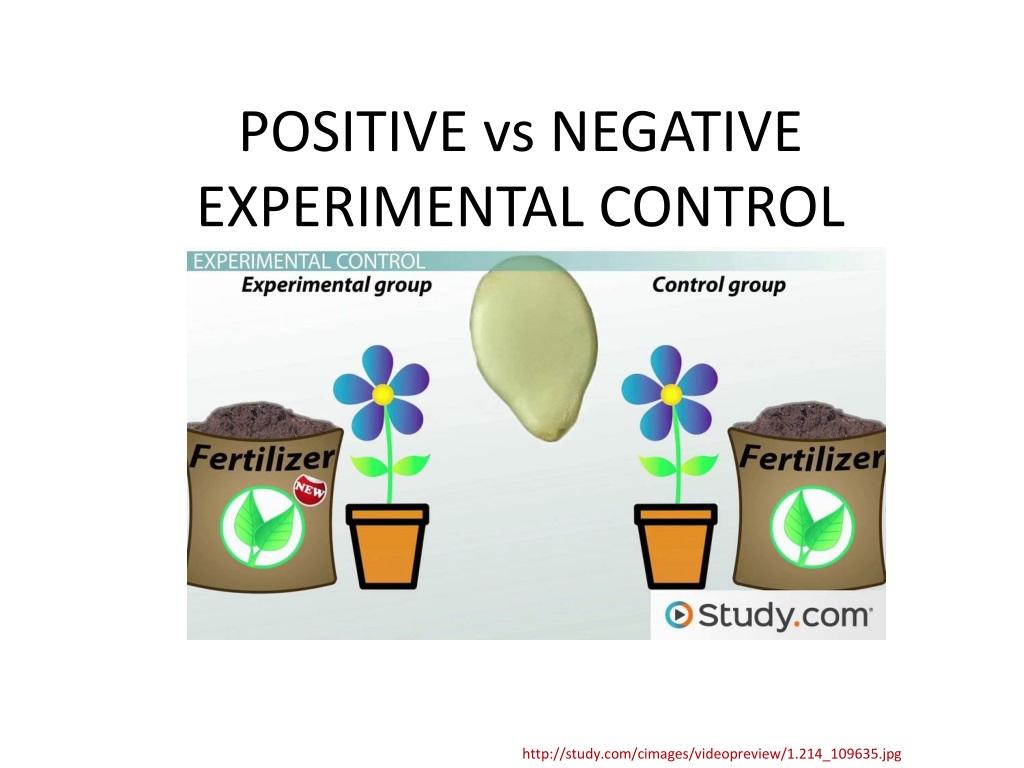
PPT POSITIVE vs NEGATIVE EXPERIMENTAL CONTROL PowerPoint Presentation ID9385967
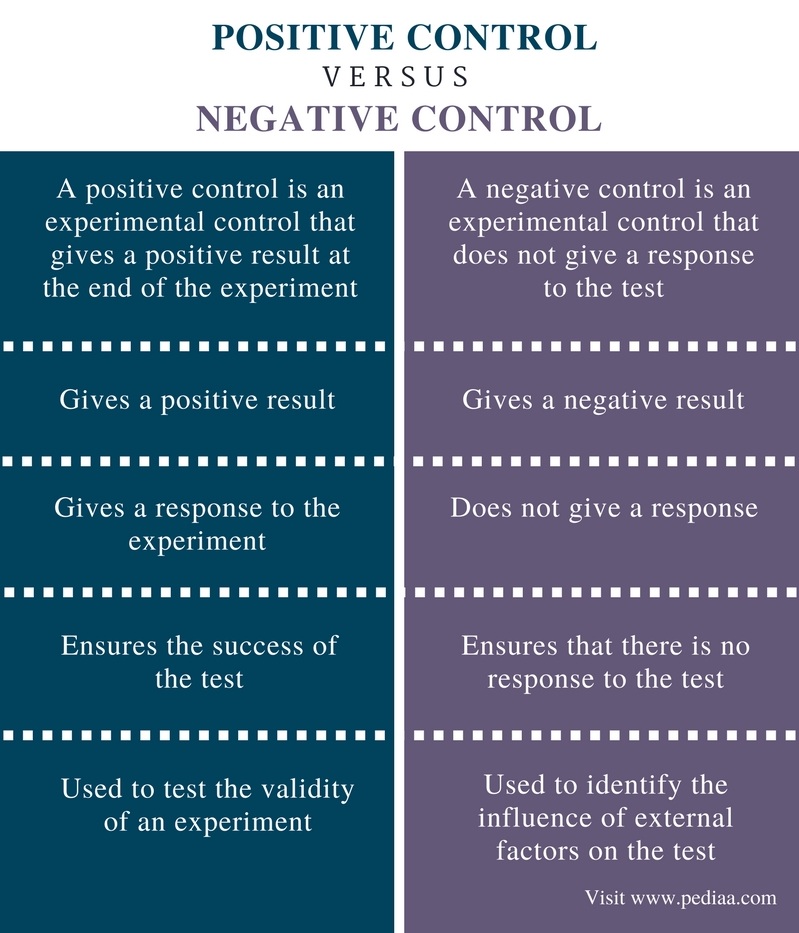
Positive Control. As with a negative control, a positive control is a parallel experiment on a different population. The treatment used in a positive control has a well understood effect on results. A positive control is typically a treatment that is known to produce results that are similar to those predicted in the hypothesis of your experiment.
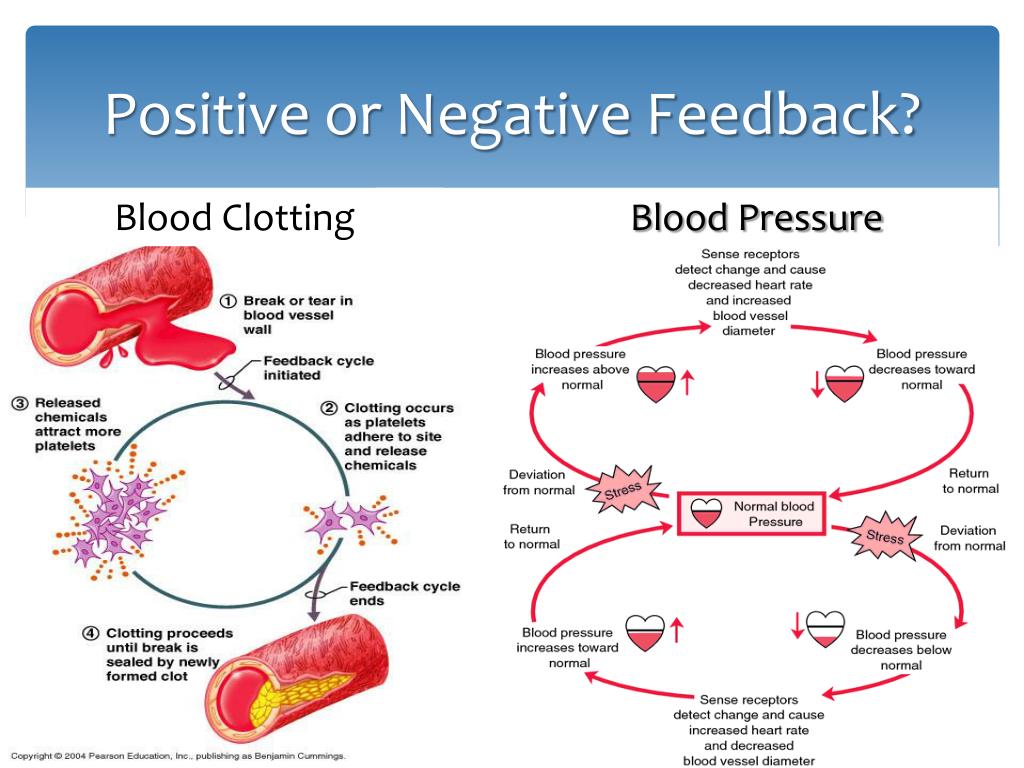
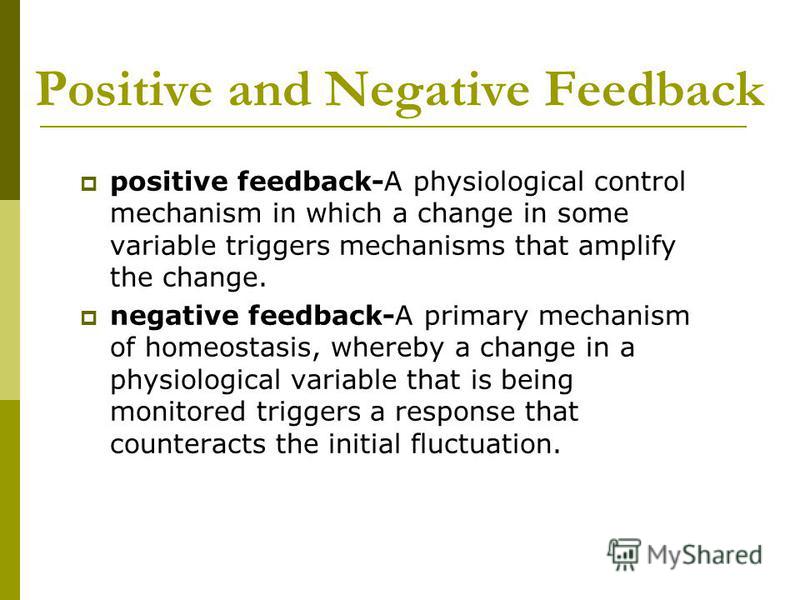
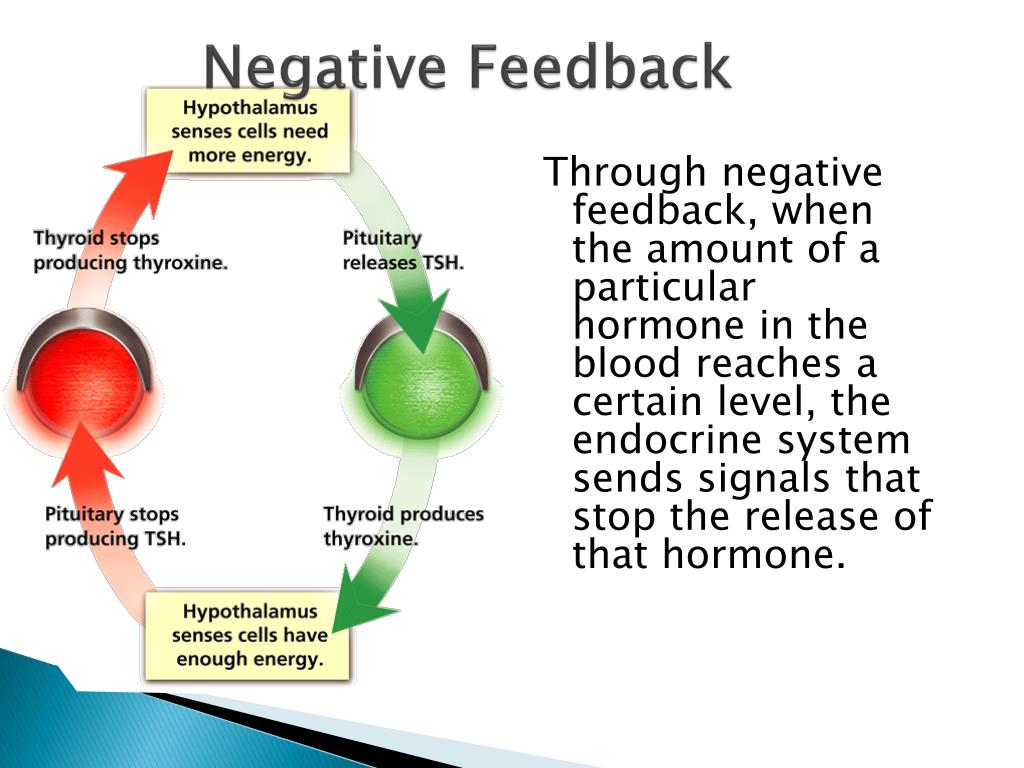
Positive And Negative Feedback Mechanism Of Homeostasis Chapter My XXX Hot Girl
Negative control methods for uncontrolled confounding adjustment. The more recent literature on negative controls has considered how and under what conditions negative controls can be leveraged to partially or fully identify target causal quantities rather than merely the presence of bias.
Positive Control vs Negative Control Differences & Examples (2024)
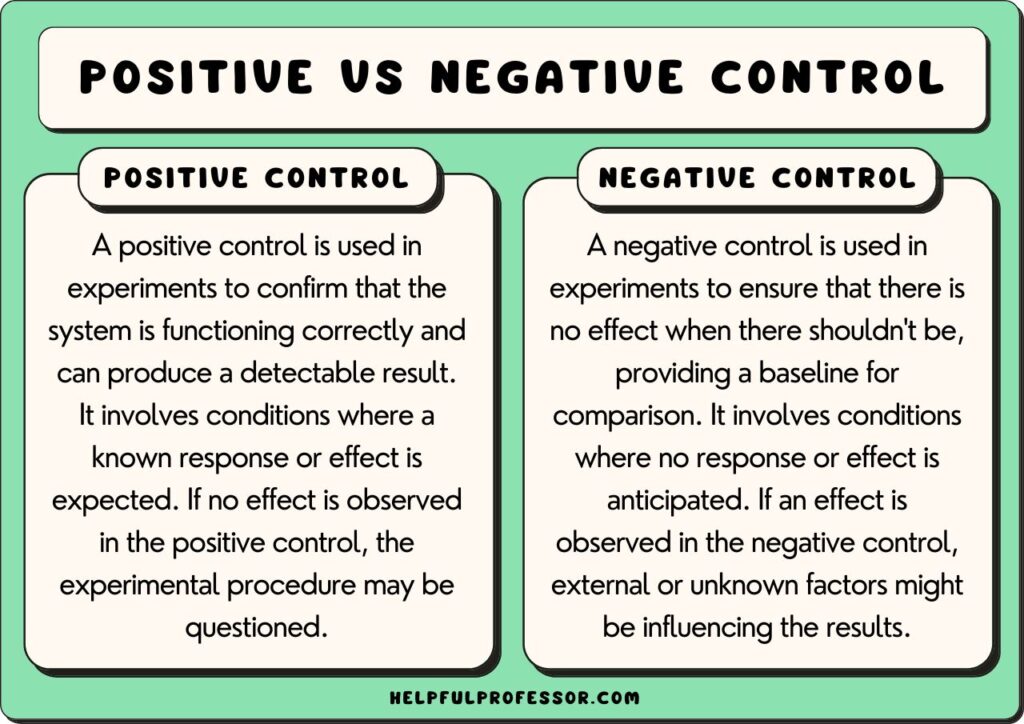
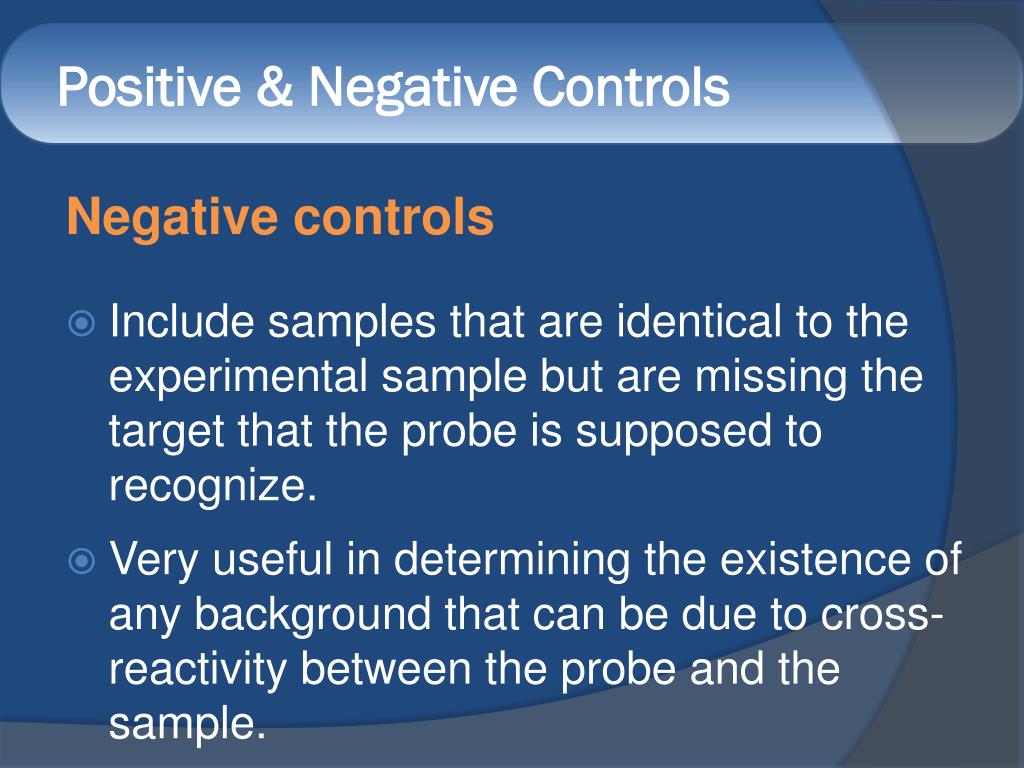
A negative control is a test in which a negative result is expected (ie.the expected phenomenon will not occur). This proves that there is no effect when there should be no effect, by using an untreated sample (and then comparing this to the treatment that is being investigated in the experiment).
Positive Control vs Negative Control Experimental Group YouTube

Negative Control Outcomes. Investigators have several design, measurement, and analytic tools to detect and reduce bias in epidemiological studies. One such approach, "negative controls," has been used on an ad hoc basis for decades. A formal approach has recently been suggested for its use to detect confounding, selection, and measurement.
Презентация на тему "Midterm Review AP Bio. Chapter 1 Material INTRODUCTION TEN THEMES IN THE
Are you conducting an experiment and wondering what types of control groups to use? In this video, we'll discuss the differences between positive and negativ.
Control Group Experiment

A negative control outcome (NCO) is a variable known not to be causally affected by the treatment of interest. Likewise, a negative control exposure (NCE) is a variable known not to causally affect the outcome of interest.
Lecture Notes
Objectives. Negative controls are considered an important tool to mitigate biases in observational studies. The aim of this scoping review was to summarize current methodologies of negative controls (both negative control exposure [NCE] and negative control outcome [NCO]).
Positive Control Definition & Experiment Video & Lesson Transcript

A scientific control is an experiment or observation designed to minimize the effects of variables other than the independent variable (i.e. confounding variables ). [1] This increases the reliability of the results, often through a comparison between control measurements and the other measurements. Scientific controls are a part of the.
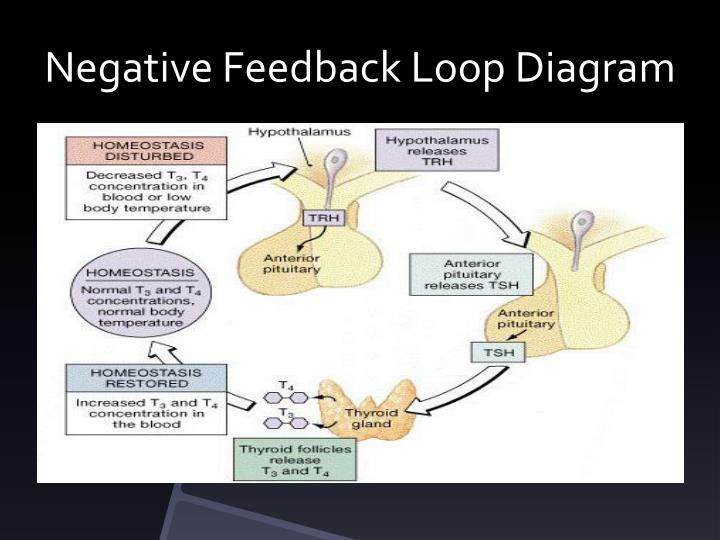
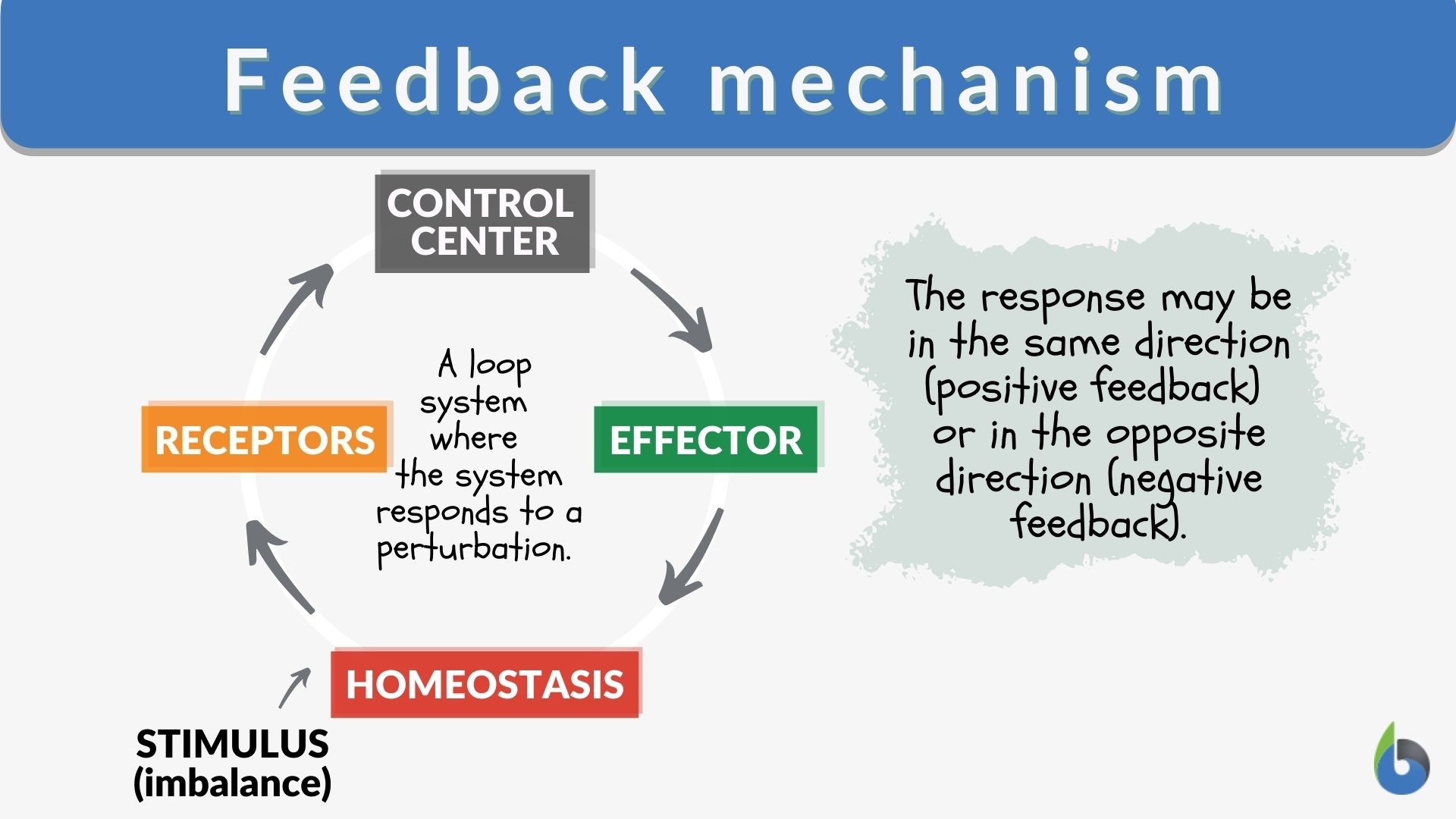
[DIAGRAM] Phrase Feedback Loop Diagram
Negative control outcomes in practice will be only approximately U-comparable, at best. Thus it is possible that the observed association between A and N is caused by some uncontrolled confounder U2, which is not a confounder of the AY association; hence, finding an unexpected association between A and N does not prove unequivocally that the A.
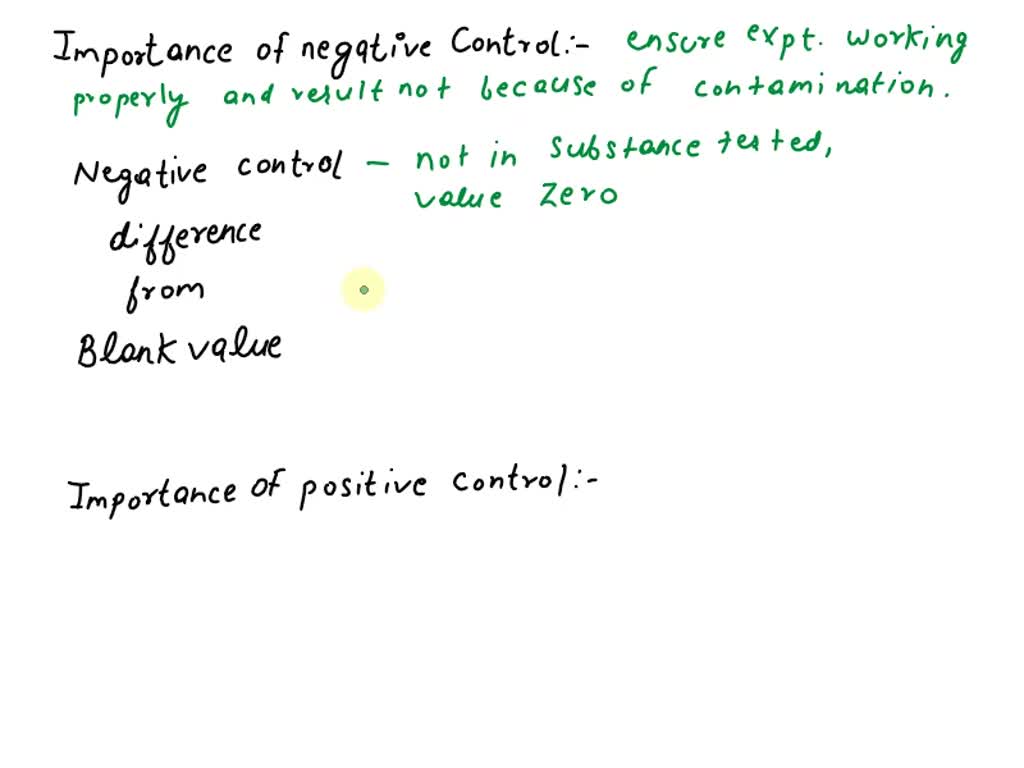
SOLVED 3) What is the importance of having the negative control? Why is the value for the
A formal approach has recently been suggested for its use to detect confounding, selection, and measurement bias in epidemiological studies. 1,2 Negative controls in epidemiological studies are analogous to negative controls in laboratory experiments, in which investigators test for problems with the experimental method by leaving out an.
Which are examples of negative feedback regulation guysjoker
The control group in an experiment is the set of subjects that do not receive the treatment. The control group is the set of subjects that does not receive the treatment in a study. In other words, it is the group where the independent variable is held constant. This is important because the control group is a baseline for measuring the effects of a treatment in an experiment or study.
In Vitro Imaging and Quantification of the Drug Targeting Efficiency of Fluorescently Labeled

Negative control variables. NCs are sometimes used in public health research to detect confounding and other sources of bias when studying the causal effect of an exposure A on the outcome Y 27.To.
Negative control as the difference in percentage of the perfusion of... Download Scientific

A negative control is an experiment that is run in parallel to a primary experiment with the same procedures except that the treatment is changed to something that is predicted to have no result. This is done to control for the placebo effect and to provide a baseline set of measurements for comparison to the primary experiment. A negative control is run at the same time as the primary.
Feedback Loop Examples
A positive control is designed to confirm a known response in an experimental design, while a negative control ensures there's no effect, serving as a baseline for comparison.. The two terms are defined as below: Positive control refers to a group in an experiment that receives a procedure or treatment known to produce a positive result. It serves the purpose of affirming the experiment's.
PPT Blotting Techniques PowerPoint Presentation, free download ID6161459
Negative control variables are widely available in routinely collected healthcare data such as administrative claims and electronic health records data, because information on secondary treatments and outcomes beyond the primary treatment and outcome of interest is often recorded and such secondary treatments and outcomes can potentially serve.