(PDF) Importance of personal hygiene in the food plant
The Food and Drug Administration (FDA) has developed this Employee Health and Personal Hygiene Handbook to encourage practices and behaviors that can help prevent food employees from spreading.
Food Hygiene Course Hygiene certificate Basic Hygiene Course
Previous studies have found that poor personal hygiene could be a potential source of infections and may serve as a reservoir of genes for antimicrobial. A total of 294 (72.6%) FHs had >1 year of experience in the food service industry. Of these, 152 (51.7%), 76 (25.9%) and 66 (22.5%) had been working for 1-5, >5-10 and >10 years.
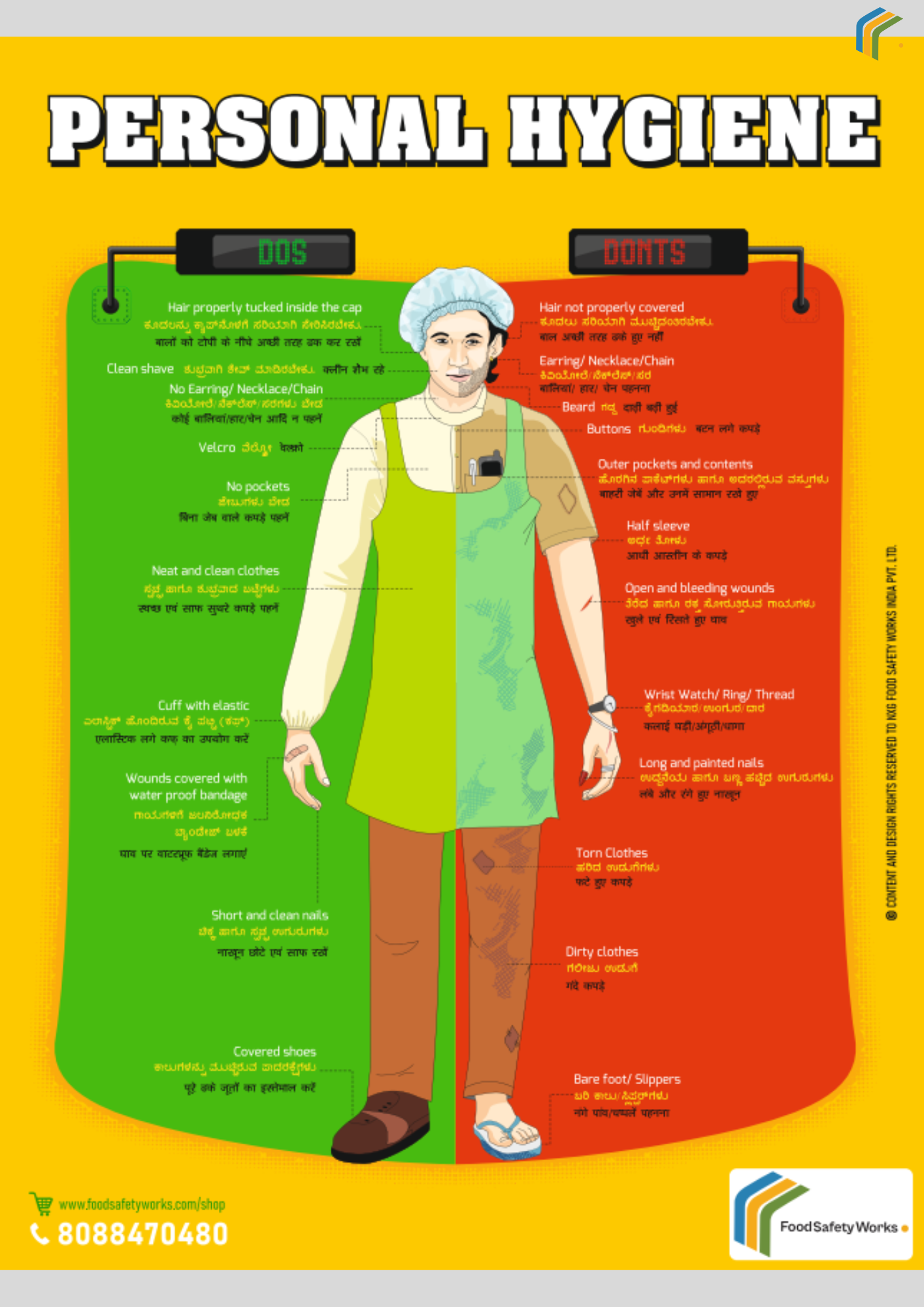
Personal Hygiene Poster Food Safety Works
These are quite effective for food manufacturing plants. Antiseptics commonly used for hand hygiene include alcohol (concentrations of 62-72%), iodine and iodophors (special formulations), chlorhexidine gluconate (used for washing), chloroxylenol (concentrations of 0.3-2.5%), and triclosan (common in hand washing formulations).
The Importance of Hygiene in the Food Industry

2. Personal Hygiene in Food Production: Presentation Objectives The objectives of the presentation are: - To provide an overview of the topic "Personal Hygiene in Food Production" as covered in the FAO GHP Toolbox. - To make trainers aware of how food handlers may contaminate food. - To enable trainers to identify potentially hazardous contamination paths in the industries that they.
Kitchen Hygiene Food Hygiene Wallchart Food Safety Posters Food Safety Signs, Labels

Personal hygiene in the food industry. December 2014. DOI: 10.1533/9780857098634.3.408. In book: Hygiene in Food Processing (pp.408-440) Authors: E. Margas. J.T. Holah. To read the full-text of.
Do You Need Level 2 Food Hygiene Training for Manufacturing? FHC Blog
Personal hygiene is (or should be) an integral part of the food quality and safety for each and every food processor. In the United States, Current Good Manufacturing Practices in Manufacturing, Packing or Holding Human Food (better known as cGMPs) found in 21 CFR Part 110:10 includes a section entitled "Personnel." The elements within this section may be found in "Personnel,", and.
Personal Hygiene poster

This chapter shows what good hygiene policy should contain, how to conduct effective training and what are the important aspects to consider during hand washing, hand drying and crossing the barrier between low- and high-risk areas. The importance of personal hygiene in food production and preparation facilities is emphasized by reference to.
Jewelry Policy Food Manufacturing Style Guru Fashion, Glitz, Glamour, Style unplugged
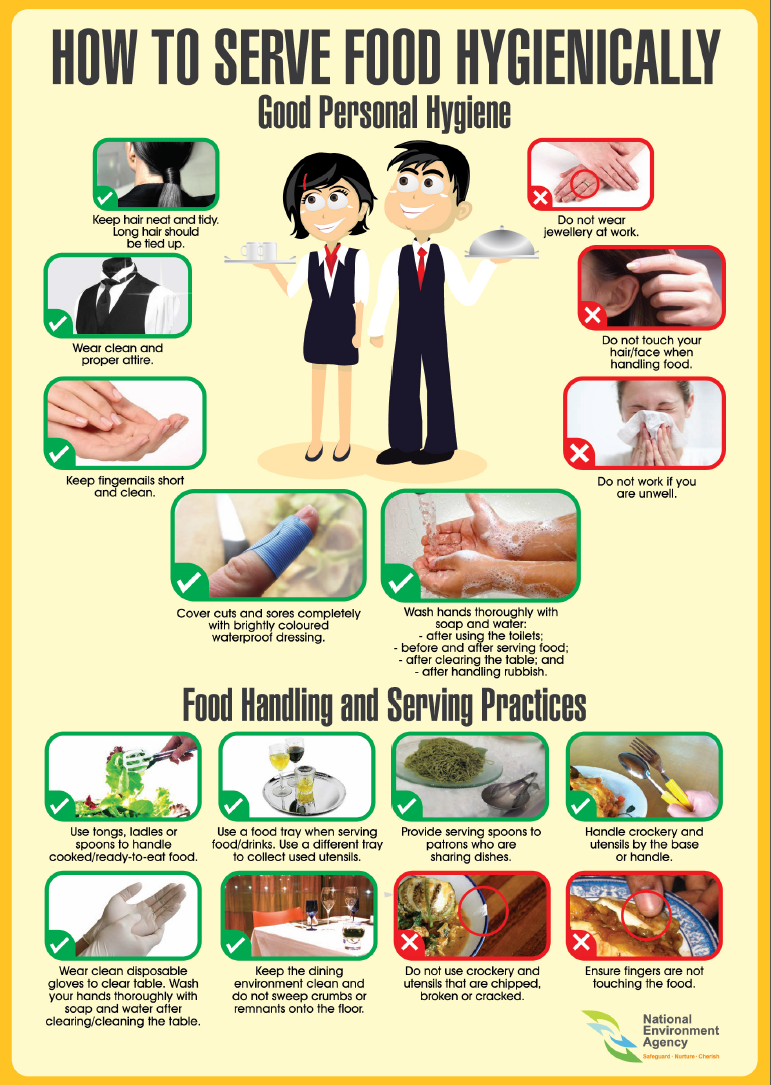
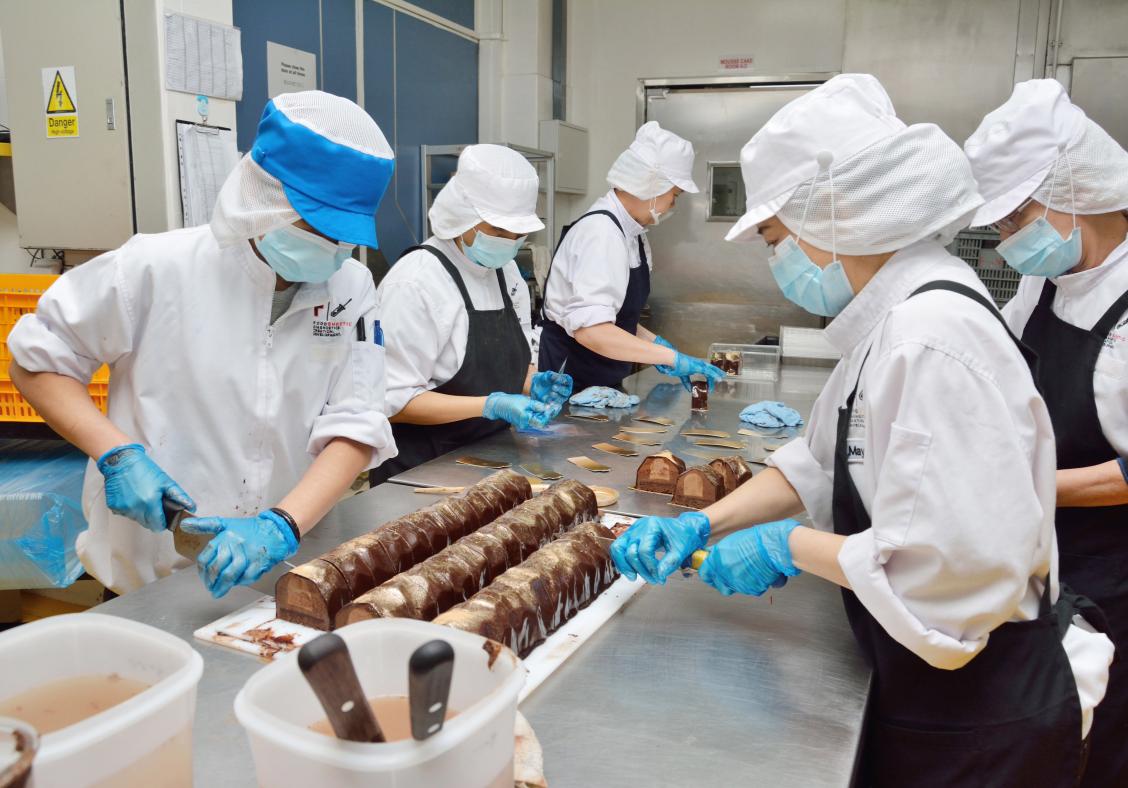
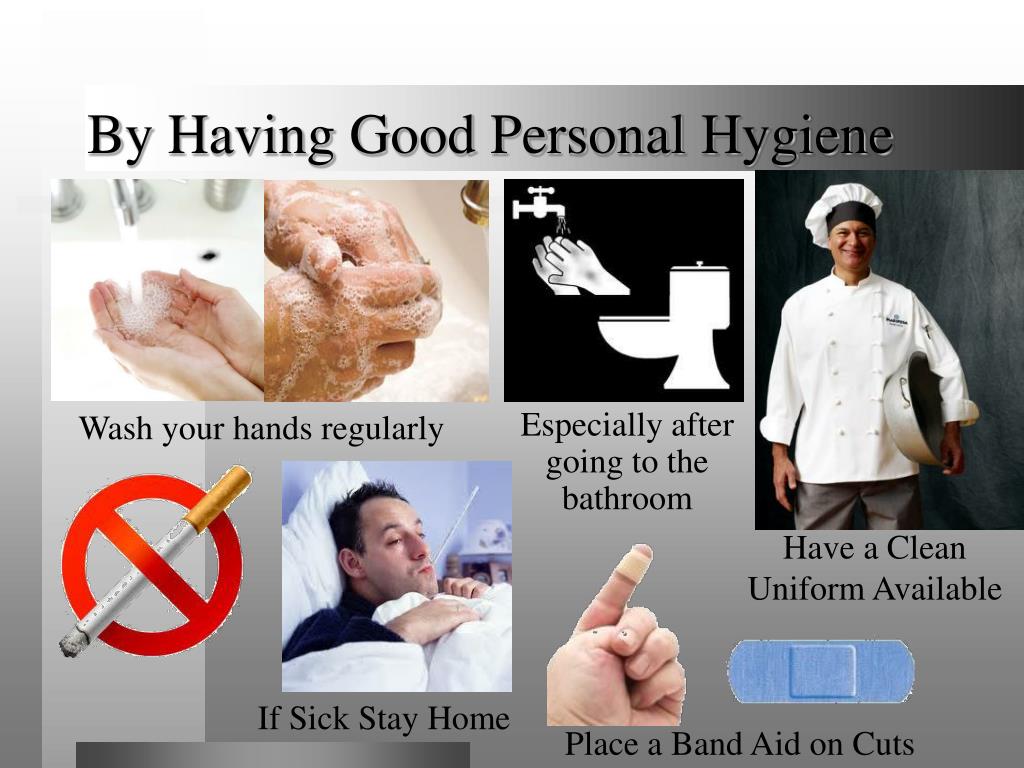
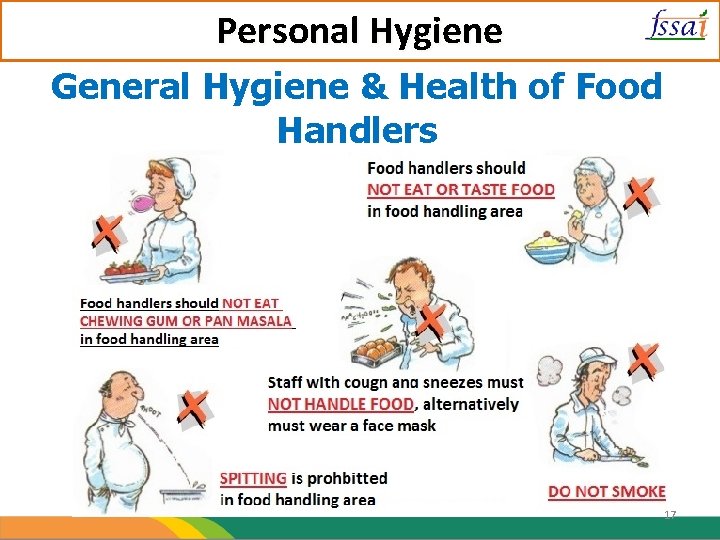
never smoke, chew gum, spit, change a baby's nappy or eat in a food handling or food storage area. never cough or sneeze over food, or where food is being prepared or stored. wear clean protective clothing, such as an apron. keep your spare clothes and other personal items (including mobile phones) away from where food is stored and prepared.
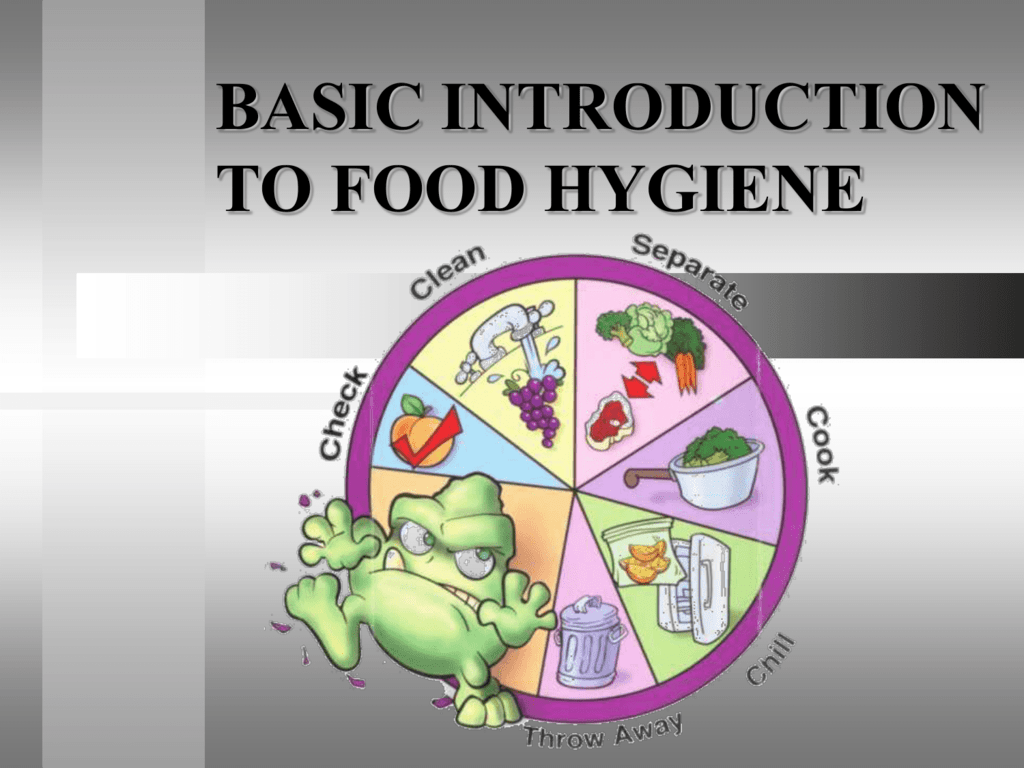
basic introduction to food hygiene
The good news is that many best practices in personal hygiene are well-established in the food industry. Staying on top of some of the more common personal hygiene practice "do's and don'ts" is also a good idea, especially in preparation for an audit or inspection of your facility. Getting Personal with People
PPT BASIC INTRODUCTION TO FOOD HYGIENE PowerPoint Presentation, free download ID443658
Abstract. Personal hygiene and maintaining the health of the employees in the food industry are critical to avoiding food-borne illnesses in the public and fellow workers alike. Most food-borne disease outbreaks come from foodservice facilities, particularly restaurants, but also catered events, the home, schools, child-care centers, and.
NEA suspends 137 food licences, takes 2,700 actions against operators with poor hygiene

Here are some general personal hygiene tips to start implementing today. 1. Wash Your Hands-We Can't Say It Enough! Washing your hands is perhaps the most critical step in preventing the spread of germs while working in the food industry. Before touching. any food or utensils, you should wash your hands.
Personal Hygiene for Food Handlers YouTube

• Relationship between the food employee's job task, personal hygiene, and foodborne illness; • Requirements for reporting; and • Specific symptoms, diagnoses, and exposures that must be.
StandUp Training Food Worker Personal Hygiene

It is imperative for the food industry to reinforce personal hygiene measures and provide refresher training on food hygiene principles. 2. to eliminate or reduce the risk of food surfaces and food packaging materials becoming contaminated with the virus from food workers. Personal protective equipment (PPE), such as masks and gloves, can
Why Is Personal Hygiene Important In Food Industry?

food hygiene. hand washing. 12.1. Introduction: definition of personal hygiene. People who work around open food may contaminate the food or surfaces that the food may come into contact with. Personnel are both reservoirs and vectors of microorganisms and can act as a source of microbial contamination to food products.
Food Safety & Hygiene Practices Kelly's Chaotic Kitchen
Here are seven basic hygiene practices that should be followed while at your establishment: 1. Have a clean uniform. The goal is simple: bring as few pathogens as possible to work. Your uniform could contain a variety of pathogens, especially when it is dirty. Wash it often and wear a clean uniform each shift.
Hygienic and Sanitary Practices for Food Catering Businesses
Proper food handling, which includes good personal hygiene, is an important element in food safety. Good personal hygiene habits go a long way with customers. You are handling their food, and they want to see food handlers who look professional and put-together, as opposed to food handlers who follow poor hygiene habits.